Helen Winter

Helen Winter is an enterprise transformation leader, author, and operating model strategist with deep experience in designing and delivering complex organisational change. She has led transformation programmes across multiple organisations and sectors, focusing on the operating model mechanisms that link strategy to execution — including commercial model redesign, governance frameworks, squad operating models, PMO modernisation, financial controls, tooling and data alignment, and AI-enabled delivery. Her work centres on helping organisations build operating models that deliver predictable, efficient, and value-driven outcomes. Her expertise spans transformation programme design, enterprise agility, cross-functional governance, behavioural and cultural change, and the practical integration of tools and processes to improve business performance. Helen is also a global business author with Kogan Page. Her first book, The Business Analysis Handbook, was a finalist for two major industry awards: the PMI award for contribution to project management literature and the Business Book Awards’ Specialist Book category. She is an active member of the APM Programme Management Specific Interest Group, contributing to thought leadership, guidance, and the development of good practice for programme delivery. A frequent speaker at project, programme, and transformation forums, Helen shares her insights through her long-running blog BusinessBullet.co.uk, visited by over 5,000 readers a month. Her current writing focuses on modern operating models, transformation leadership, organisational capability, and the real-world dynamics that determine whether change succeeds or fails.

Author Archives: Helen Winter

Business Analyst and Project Manager collaboration

By | 23/04/2018

Introduction This article is about the collaboration required between the project manager and business analyst.  They both contribute to project delivery but from different perspectives. Summary of the different responsibilities. A project manager has the overall responsibility for the successful initiation, planning, design, execution, monitoring, controlling and closure of a project.  Their focus is on delivery within scope, budget, timescales and… Read More »
Analysis approach for large complicated data centric projects

By | 02/04/2018

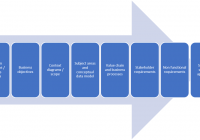
Introduction There are some projects where data may play an important part and hence the elicitation of data requirements and understanding the techniques to use as a result are necessary. This article aims to cover these techniques and to provide a guide of how to use them. Examples of data centric projects could include: Bringing data together into… Read More »

Understanding the problems, opportunities and its importance when initiating change projects

By | 10/03/2018

Introduction It is important to understand the problems to be resolved and opportunities at the early stages of a project.  These will build the foundations for understanding and prioritising requirements, design and implementation.   If requirements do not relate back to a problem or opportunity, then the objectives of the project may not be realised.  It is the responsibility… Read More »

5 Guidelines for writing good business requirements

By | 24/02/2018

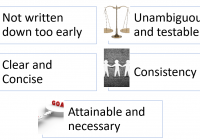
This article is about providing some guidelines for writing good business requirements.  Consequences for not getting this right could lead to the project failing as the solution provided will be dependent on this being correct and interpreted in the right way. Resist temptation to write down the requirements in narrative form too early Techniques such as using diagrams… Read More »

10 reasons for using Business Analysts at the early stages of a project or pre-project

By | 18/02/2018

There are many reasons why Business Analyst involvement doesn’t happen until much later on in a project.  Examples are: The business often feels they can sort out the early stages on their own. Not enough known about how a business analyst can help. There isn’t the money to fund the resource if additional cost. Not always possible to… Read More »

Providing a methodology and tool to transfer business knowledge

By | 05/11/2017

When is this applicable During business change, business processes may need to be transferred to a new or wider stakeholder group.  This may be particularly relevant during migrations, acquisitions, mergers or target operating model changes. Components of business knowledge The various components are the following: What is the expected outcome/benefit of introducing a standard methodology and tool? The… Read More »

Audience Analysis – A technique to help with Business Change

By | 21/10/2017

By Ravi Kumar This article is to provide a brief and the essence of my talk I delivered on this topic at Europe Business Analysis Conference, London, September 25-27 2017 and Balkan Business Analysis Conference, Sofia, October 6-7 2017. This is to emphasis why ‘Audience Analysis’ is crucial for embedding business change successfully and to further elaborate how this technique could… Read More »

My key takeaways – Europe Business Analyst Conference 2017, London

By | 11/10/2017

This article is a reflection on my experience at the BA 2017 Conference in London last month, I found it amazing and worth attending as it provided me with the opportunity to listen, learn and network with delegates from many countries and organisations. It helped broaden my knowledge and perspective about business in general and business analysis in… Read More »

Writing a Target Operating Model (TOM)

By | 08/10/2017

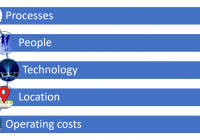
*****If you are interested in learning more about Target Operating Models you could sign up to join my online training course – Handling Transformation using a Target Operating Model. A Target Operating Model shows how an organisation should be supported by its employees and its organisational structure to deliver and execute the organisations future strategy.  It provides a… Read More »

Adapting the requirements gathering process for Commercial off the shelf packages (COTS)

By | 29/07/2017

Commercial off the shelf packages (COTS) are packaged solutions that can be used out of the box or configured to meet the business needs.  This is instead of creating software from scratch.  The benefit of the latter is that the solution can be developed to meet the requirements exactly. Using COTS may involve requirement trade-offs but: May be… Read More »